
Local AU stockSame business day dispatchHigh purity premium stockFree standard shipping on orders $300+Discreet delivery

Now in stock — Reta 10mg, Reta 60mg, Tirz 20mg, CJC + Ipa 10mg, NAD+ 500mg, MT-II 10mg.

Shop now
Beginner Guides6 min read23 February 2026

How to Use a Peptide Calculator: A Step-by-Step Guide for Beginners

Get the maths right every time. This guide walks you through exactly how much bacteriostatic water to add to your vial — and our free calculator does it for you instantly.

View markdown version for AI and text-first readers

How to Use a Peptide Calculator: A Step-by-Step Guide for Beginners

One of the most common questions from anyone new to peptide research is: how much bacteriostatic water do I add to my vial? Get this wrong and every dose you measure will be off. This guide walks you through the exact maths — and we've built a free calculator below to do it for you instantly.

Understanding Peptide Concentration

When you receive a lyophilised (freeze-dried) peptide vial, the powder inside has a specific weight — usually expressed in milligrams (mg). To use the peptide, you need to dissolve it in bacteriostatic water (BAC water) to create a liquid solution. The concentration of that solution depends entirely on how much water you add.

The formula is straightforward:

Concentration (mg/mL) = Peptide Amount (mg) ÷ Volume of BAC Water Added (mL)

For example, if you add 2 mL of BAC water to a 10 mg vial:

  • 10 mg ÷ 2 mL = 5 mg/mL

Every millilitre of the resulting solution now contains 5 mg of peptide.

Why the Amount of Water Matters

Adding more water lowers the concentration, which means you need to draw a larger volume to achieve the same dose. Adding less water raises the concentration, so smaller volumes deliver more peptide. Neither is inherently wrong — it comes down to what dose you need and how precisely your syringe can measure it.

For most research applications, a concentration that puts your target dose somewhere between 5 and 20 units on a U-100 insulin syringe is ideal. This range is easy to measure accurately without being too small to read.

Reading a U-100 Insulin Syringe

Most researchers use U-100 insulin syringes — the same ones included in our 20pk syringe packs. Here is what you need to know:

  • A U-100 syringe holds 50 units total (0.5 mL barrel)
  • Each unit = 0.01 mL
  • So 10 units = 0.10 mL, 20 units = 0.20 mL, and so on

To calculate how many units to draw for a specific dose:

Units to draw = Desired Dose (mg) ÷ (Concentration (mg/mL) ÷ 100)

Example: You want a 0.25 mg dose from a 5 mg/mL solution:

  • 5 ÷ 100 = 0.05 mg per unit
  • 0.25 ÷ 0.05 = 5 units

Use Our Free Peptide Calculator

Most peptide calculators ask the wrong question. They ask how much water you're adding — but in practice, what you actually know is your vial size and your target dose. The water amount should be the output, not the input.

Our calculator works this way: select your peptide, enter your target dose, and it calculates exactly how much BAC water to add so your dose lands on a real syringe tick mark — no guessing, no 17.3-unit draws.
Peptide Reconstitution Calculator

Pick your peptide and target dose — we'll tell you exactly how much BAC water to add.

Add to vial

2.8mL

of bacteriostatic water

Draw

7units

on your syringe

Concentration

3.57mg/mL

per mL of solution

Research use only. Mathematical tool — not dosing advice.

Common Reconstitution Scenarios

Here are some of the most common setups researchers use to help you choose what works for your protocol:

  • 10 mg vial + 2 mL water → 5 mg/mL → 0.25 mg dose = 5 units
  • 10 mg vial + 1 mL water → 10 mg/mL → 0.25 mg dose = 2.5 units
  • 5 mg vial + 2 mL water → 2.5 mg/mL → 0.25 mg dose = 10 units
  • 5 mg vial + 1 mL water → 5 mg/mL → 0.25 mg dose = 5 units

Tips for Accurate Dosing

  • Always use bacteriostatic water — not sterile water. BAC water's preservative properties keep your reconstituted solution stable for weeks when refrigerated.
  • If your calculated units fall below 2–3, consider adding more water to raise the volume and make measurement easier.
  • If your units exceed 50, consider using less water for a more concentrated solution.
  • Always draw carefully and slowly — overfilling a syringe barrel introduces air and inaccuracy.

⚠ For in-vitro research and laboratory use only. Not for human consumption.

Shop Our Range

View all →
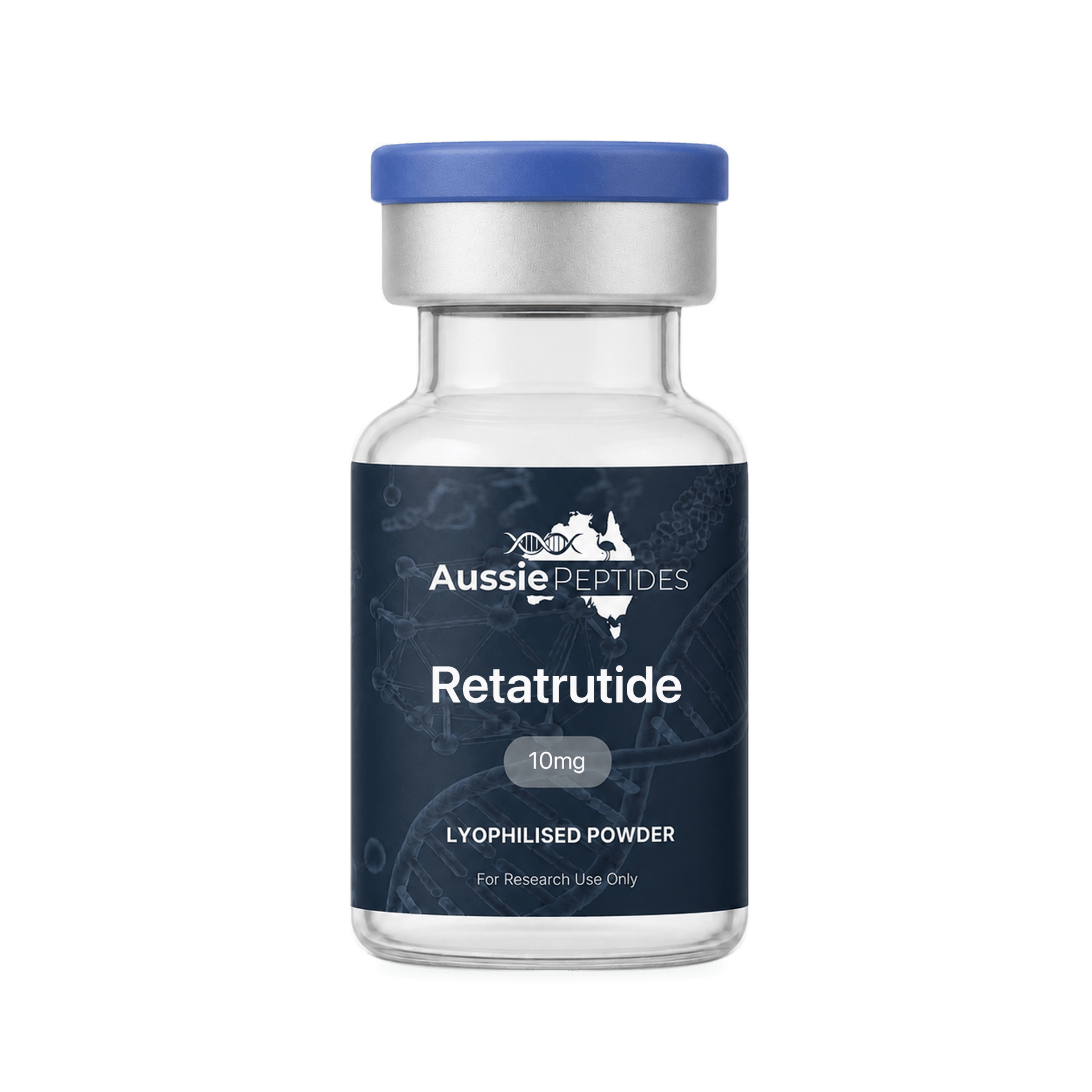
Retatrutide (10mg) Peptide Vial - Buy Online Australia

Metabolic Research

In Stock

Retatrutide (10mg)

Reta is a common short name for Retatrutide (LY3437943). This listing supplies 10mg of lyophilised powder per vial for in-vitro laboratory research.

SKU: PEP-007-10MG

$144.99
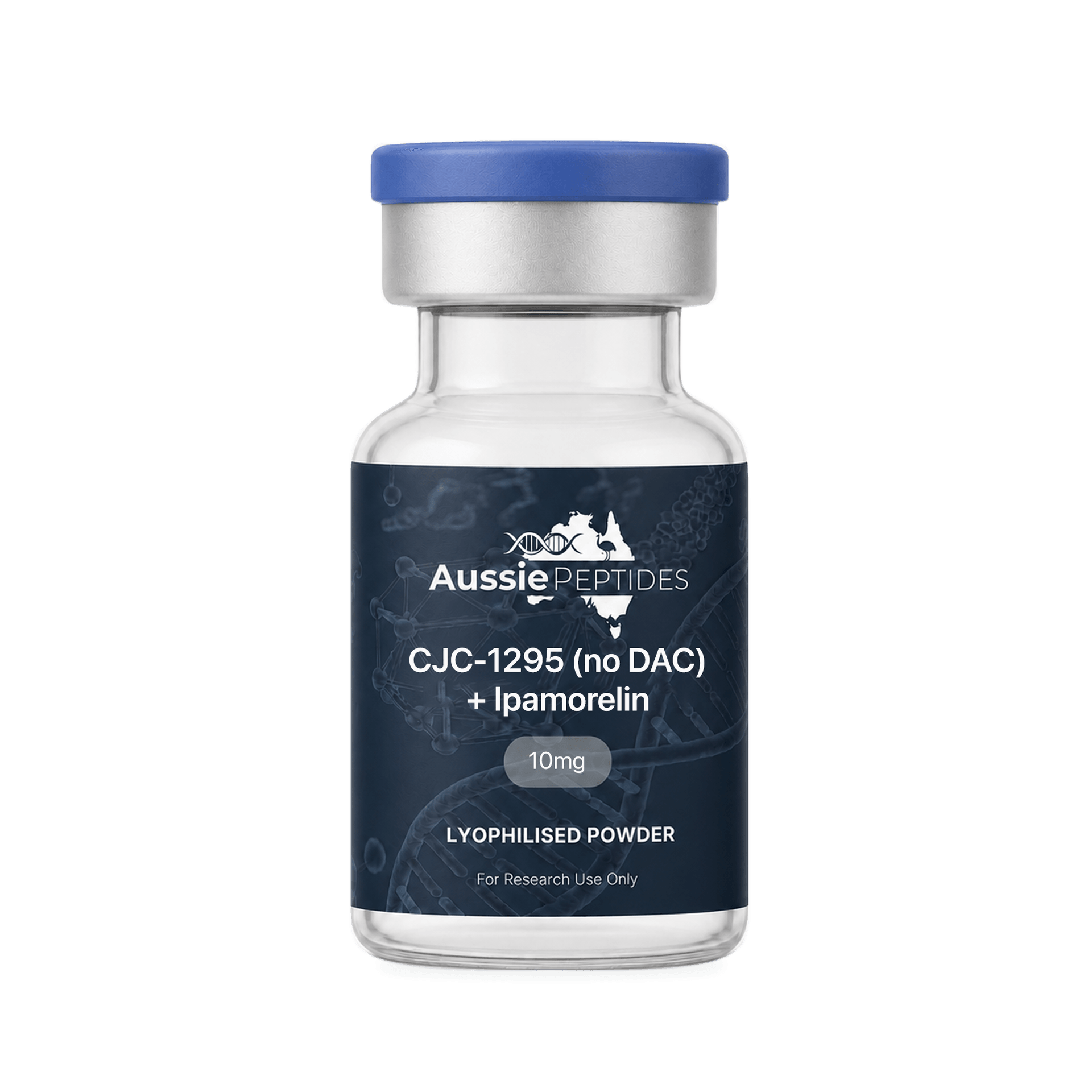
CJC-1295 (no DAC) + Ipamorelin (10mg) Peptide Vial - Buy Online Australia

Growth Hormone Research

In Stock

CJC-1295 (no DAC) + Ipamorelin (10mg)

This pre-blended vial combines two of the most studied GH-stimulating peptides — CJC-1295 (no DAC) and Ipamorelin — in a single research format. The two compounds activate complementary receptors: CJC-1295 (no DAC) stimulates GHRH receptors; Ipamorelin selectively stimulates ghrelin receptors (GHS-R1a). When both signals reach the pituitary simultaneously, the resulting GH pulse is synergistic and exceeds either compound alone.

SKU: PEP-017-10MG

$129.99
BPC-157 + TB-500 (10mg) Peptide Vial - Buy Online Australia

Tissue Repair Research

In Stock

BPC-157 + TB-500 (10mg)

The Wolverine Stack is a common nickname for the combination of BPC-157 and TB-500. This listing supplies both compounds pre-blended in a single 10mg research vial. The nickname identifies the combination; it is not evidence of rapid healing or proof that the blend outperforms either ingredient alone.

SKU: PEP-018-10MG

$109.99